


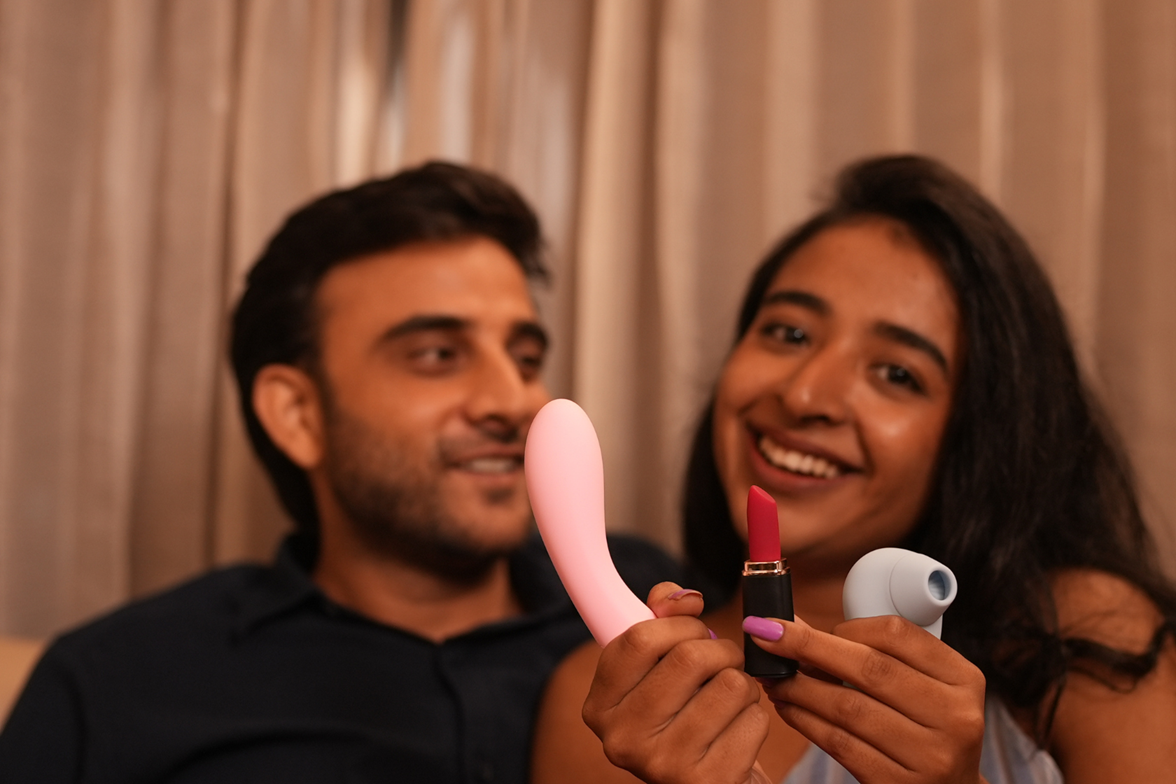
Every Masturbation Myth Indians Grow Up With, Answered by Science
You probably heard it from a cousin, a coach, a relative who delivered it with total authority: masturbation causes weakness. Or pimples. Or memory loss. Or it is a sin. Or it means something is wrong with you.
Nobody cited a source. Nobody needed to. It was just known.
Here is what is actually known, by the researchers who study this properly. Almost everything you were told is wrong. And the cost of believing it, in shame, confusion, and disconnection from your own body, is real and measurable.
Myth by myth. Let us go through them.
"It causes physical weakness."
The science: No peer-reviewed study has ever found a causal link between masturbation and physical weakness, fatigue, or loss of strength. Research published in PubMed shows masturbation has no negative effect on testosterone levels, muscle mass, athletic performance, or energy. The myth likely originated from historical pseudoscience that treated semen as a finite life force. It is not. The body produces it continuously and regulates production based on demand.
This myth has caused specific damage in India. Men who believe it self-police their sexual behaviour, experience guilt when they fail to, and carry anxiety that a completely normal bodily function is slowly depleting them. None of that is grounded in anything real.
What is actually true: Regular masturbation is associated with improved mood, reduced stress, better sleep, and in men, some evidence suggests it may reduce the risk of prostate issues over time. The body is not a battery that drains. It is a system that regulates.
"It causes pimples / hair loss / dark circles."
The science: No. There is no physiological mechanism by which masturbation causes acne, hair thinning, or visible changes to skin or eyes. These are entirely separate biological systems. Acne is driven by hormonal fluctuation, genetics, and skin bacteria. Hair loss is primarily genetic. Dark circles are caused by sleep deprivation, genetics, and allergies.
The persistence of this myth is worth understanding. It functions as a detection mechanism: if masturbation left visible signs, it could be caught. The myth was cultural surveillance dressed up as medical fact. It was never medicine.
"It will ruin sex with a real partner."
The science: This one is more nuanced, and it deserves a direct answer. For the vast majority of people, masturbation has no negative effect on sexual function or satisfaction with a partner. Research in the journal Archives of Sexual Behavior consistently shows that people who masturbate regularly report equal or greater sexual satisfaction in relationships compared to those who do not.
There is one genuine exception worth naming: compulsive use of pornography combined with masturbation can, in some people, affect arousal patterns. This is a specific and relatively uncommon pattern, not a general rule about masturbation itself. Masturbation without compulsive pornography use does not carry this risk.
What is actually true is the opposite of the myth. Solo pleasure helps people understand their own body, their own preferences, what they respond to and how. That self-knowledge makes partnered sex better, not worse.
Want to explore solo pleasure with better tools? Our for-her collection and for-him collection are built for exactly this. Discreet packaging, medical-grade silicone, app-controlled.
"Women don't do it / shouldn't do it."
The science: Women masturbate. This is not controversial in any research context. Surveys consistently show that the majority of women masturbate across all age groups, geographies, and cultures, including India. The figures are almost certainly underreported because of precisely this myth.
The WHO definition of sexual health includes the right to sexual pleasure as a component of wellbeing. That right is not gendered. Female masturbation is not less normal, less healthy, or less acceptable than male masturbation. It is equally normal and, given that the clitoris exists entirely for pleasure and has no other biological function, arguably straightforwardly designed for it.
The myth causes real harm. Women who grow up believing their desire is abnormal cannot advocate for their own pleasure, cannot understand their own bodies, and are less likely to recognise when something is wrong. Self-knowledge starts with permission to explore. Read more about why sexual fantasies are completely normal if you want the broader picture on desire and normalcy.
"If you need to do it, something is missing in your relationship."
The science: Masturbation and partnered sex are not competing activities. They serve overlapping but distinct purposes. One is relational, involves another person, requires negotiation of timing and preference, and carries emotional weight. The other is personal, private, and available entirely on your own terms.
Most adults in long-term relationships continue to masturbate. Research shows this is unrelated to relationship satisfaction. People in highly satisfying relationships masturbate. People in difficult relationships masturbate. It is not a signal. It is a behaviour.
The idea that masturbation represents something missing puts the person who does it in a position of constant justification. It treats a private act as evidence of a relational failure. That framing has no scientific basis and a great deal of cultural baggage.
"It is addictive."
The science: Masturbation does not meet the clinical criteria for addiction in the way alcohol or substances do. There is no chemical dependency. There is no physiological withdrawal. "Compulsive sexual behaviour" is a real and recognised pattern, but it is distinct from regular masturbation and affects a small minority of people.
The addiction framing is often applied to masturbation by people who feel guilty about it and are looking for a framework that explains why they want to stop. But guilt is not the same as harm. If masturbation is not causing you distress, interfering with your responsibilities, or affecting your relationships, it is not a problem. Feeling guilty about it is a problem. Those are different things.
"The guilt means it is wrong."
This is the most important myth to dismantle, because it is the one that does the most damage.
Guilt about masturbation in India is not the product of personal moral failure. It is the predictable result of growing up in a culture that never gave anyone permission to have a healthy, honest relationship with their own body. The guilt was installed. It was not discovered.
Sexual wellness is a recognised component of overall health, not a luxury or an indulgence. A healthy relationship with your own body, including knowing what you want, what you feel, and what feels good, is not something to overcome. It is something to build.
If you want a judgment-free space to think through desire, curiosity, or simply to feel less alone in any of this, Velvet AI is that space. And Velvet Stories is audio that treats your desire as normal, because it is.
The myth was never about your health. It was about control. Science disagrees. Your body always did too.
Frequently Asked Questions
Is masturbation normal in India?
Yes. Masturbation is a normal part of human sexuality across all cultures, including India. Research consistently shows the majority of adults masturbate regardless of gender, age, or relationship status. Cultural silence and stigma in India make it feel less common than it is, but the behaviour is universal. The shame around it is cultural, not biological.
Does masturbation cause physical weakness?
No. No peer-reviewed research has found any link between masturbation and physical weakness, fatigue, testosterone reduction, or loss of athletic performance. This myth originates from historical pseudoscience treating semen as a finite life force. The body produces semen continuously and regulates production based on need. Masturbation has no measurable negative effect on physical health.
Does masturbation affect sperm count or fertility?
Temporary and short-term. Masturbation immediately before a fertility test can affect the sample. In normal circumstances, sperm production is continuous and not diminished by regular masturbation. There is no evidence that masturbation has any long-term effect on fertility in either men or women.
Is masturbation healthy?
Yes. Research associates regular masturbation with improved mood through endorphin and oxytocin release, reduced stress and cortisol levels, better sleep quality, and greater self-awareness around sexual preference. In men, some research suggests regular ejaculation may support prostate health. The WHO includes the right to sexual pleasure as a component of sexual health.
Does masturbation ruin sex with a partner?
For the vast majority of people, no. Research consistently shows people who masturbate regularly report equal or greater sexual satisfaction in partnerships. Self-knowledge gained through solo pleasure tends to improve partnered sex because people are better able to communicate what they want. The exception is compulsive pornography use combined with masturbation, which is a distinct and uncommon pattern unrelated to masturbation alone.
How do I deal with guilt about masturbation?
Guilt about masturbation in India is largely a cultural product, not a moral signal. Understanding where it came from, recognising that the behaviour itself is medically normal, and separating shame from harm are useful starting points. If the guilt is persistent and affecting your wellbeing, speaking to a therapist or counsellor with a sex-positive framework can help significantly. You can also explore desire in a private, judgment-free way through platforms like Velvet AI.
Read more

Most couples in India are having sex that does not work very well for at least one of them. Most of them know something is off. Almost none of them know it has a specific, measurable, fixable cause...

75% of women cannot orgasm from penetration alone. Between 10 and 15% have never had one at all. And the majority of adults, men and women, have experienced stretches where orgasm felt completely o...
Leave a comment
All comments are moderated before being published.
This site is protected by hCaptcha and the hCaptcha Privacy Policy and Terms of Service apply.